




Whether you are thinking about joining your first hackathon or attending your next one, this blog answers the most common questions you’ll face before and during the event.
What is a Hackathon?
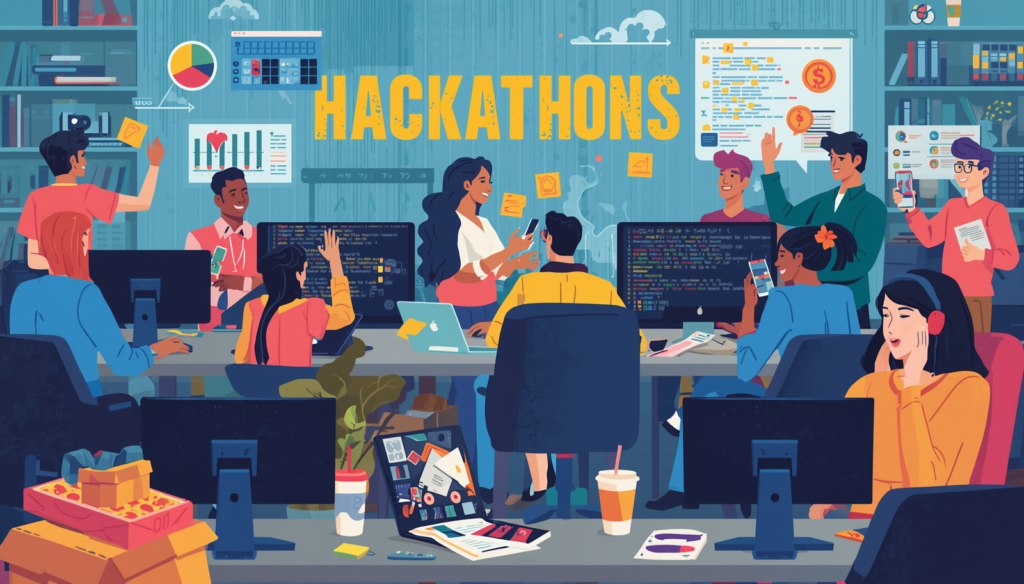
A hackathon is a short & high-energy event where participants work individually or in teams to build a working solution to a problem within a limited time. Most hackathons follow a simple flow
- You register and join a team.
- Organizers announce themes or problem statements.
- You brainstorm, build, and refine your idea.
- You present your solution to judges.
What surprises most beginners is the pace. You don’t get time to overthink. Decisions need to be quick because there isn’t enough time to explore every option, and progress matters more than perfection.
Why Should I Join a Hackathon in the First Place?
People join hackathons for different reasons, but the core benefit is simple i.e. you learn by doing. Here’s what makes hackathons valuable-
- You apply your skills in a real-world scenario instead of just learning theory.
- You meet people who think and build like you.
- You create projects that you can actually show in your portfolio.
- You understand how products are built under constraints.
In many US-based virtual hackathons, participants also get direct exposure to recruiters and startup founders, which makes these events a gateway to real opportunities, not just competitions.
How Should I Prepare for a Hackathon?

Preparation is where most participants either gain an edge or fall behind.
1. Start with your setup
Make sure your development environment works smoothly. Install your tools, test your code editor and keep your repositories ready. If something breaks during the hackathon, you lose valuable time fixing it.
2. Keep a few reusable resources ready
Reusable resources could be anything like UI templates, authentication setups & API integration snippets. These small components save hours during the build phase when time pressure is highest.
It is also useful for understanding typical hackathon topics. Many events focus on topics such as AI, sustainability, fintech & healthcare. You do not require extensive knowledge, but basic familiarity allows you to produce ideas faster and make better selections early on.
3. Think about your energy
Hackathons can be intense. Plan your sleep, food, and breaks. Staying sharp matters more than staying awake.
How Do I Choose the Right Team for a Hackathon?
Your team can either speed you up or slow you down. A “good team” is not just about skill—it’s about balance.
Ideally, you want people who bring different strengths. For example, one person handles development, another focuses on design and someone else is in charge of the pitch.
Communication is equally important. If your team members cannot explain their ideas clearly or align quickly, the progress slows down significantly.
Also, make sure that everyone has the same level of dedication in your team. When certain team members are less interested than others, it creates friction at vital points.
How Do I Come Up With a Strong Hackathon Idea?
One of the biggest misconceptions is that hackathon ideas need to be groundbreaking. They don’t. What matters more is clarity and usefulness.
Start by looking at real problems. Think about:
- Daily inconveniences.
- Inefficiencies in systems.
- Gaps in existing solutions.
These often lead to practical and also more relatable ideas.
You can also explore trending technologies.
Examples:
- AI-powered tools.
- Automation.
- Data-driven insights are common directions.
But instead of using technology just for the sake of it, focus on how it solves a real problem.
A strong idea usually has three things
- A clear problem.
- A simple and understandable solution.
- A target audience who would actually use it.
What Tech Stack Should I Use in a Hackathon?
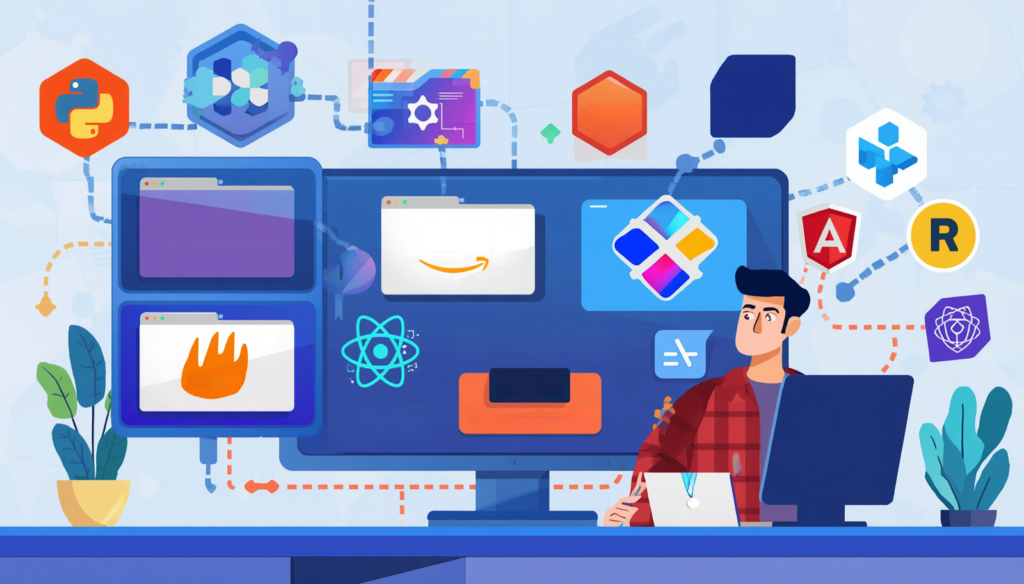
The best tech stack is the one you already know. Hackathons are not the place to experiment with completely new tools. Learning new tools slows you down in a time-sensitive event environment. Instead, use technologies you are comfortable with so you can build faster.
Focus on speed and simplicity. For this, you can use frameworks that help you deploy quickly, and rely on APIs instead of building everything from scratch. For example, instead of creating your own authentication system, use an existing service.
Instead of creating a flawless system, the objective is to create a functional prototype that amply illustrates your concept.
How Do Virtual Hackathons Work and What Should I Know?
Virtual hackathons have become rather popular, especially with global participation increasing.
In these events, everything happens online. You collaborate with your team through video calls, attend sessions and present your project on virtual platforms.
One advantage is accessibility. You can join from anywhere, and work with people across different regions. Many organizers use platforms like Airmeet to manage sessions, networking as well as presentations in a structured way.
For participants, the key is staying organized. Since you are not physically together, clear communication & structured workflows are crucial to avoid any kind of confusion & delays.
How Should I Manage My Time During a Hackathon?
Time management is often the difference between completing a project & leaving it incomplete.
Start by dividing your time into phases. Spend a small portion of time on planning, most on building, and the rest on testing and presentation.
Avoid the temptation to keep adding features. It’s better to have a simple & working product, than a complex and unfinished one.
Also, set small goals throughout the event. Completing tasks step by step keeps the team focused & prevents any kind of last-minute bottlenecks.
How Do I Build a Project Quickly Without Losing Quality?
The answer is to focus on a Minimum Viable Product (MVP). An MVP contains only the fundamental functionality that is required to illustrate your idea. You don’t need advanced features, or polished design at this stage.
Keep your interface simple so that the users can understand it easily. If needed, use placeholder data instead of building complete systems.
This method assures that you provide a working solution, which is significantly more useful than an incomplete complex idea.
What Mistakes Should I Avoid in a Hackathon?
Many participants tend to repeat the same mistakes. Avoiding these can significantly improve your chances of success:
1. Starting without a clear plan
Jumping straight into building, without defining the problem, solution, and roles usually leads to confusion and wasted time too.
2. Using unfamiliar tools or technologies
Experimenting with new tools during a hackathon slows development and increases the risk of errors.
3. Poor team communication
Lack of alignment on goals, responsibilities, or progress can delay the execution even in skilled teams.
4. Ignoring time management
Spending too much time on one phase will leave you with very little time for testing and presentation. So, you should plan your time accordingly.
5. Neglecting the presentation
Even strong projects fail if they are not communicated clearly. Judges evaluate both the idea and how well it’s presented.
How Can Hackathons Help in Career Growth?

Hackathons are one of the fastest ways to build real experience. They give you projects which you can showcase in your portfolio. Unlike academic assignments, these projects reflect your problem-solving skills and also creativity.
You also build connections with other participants, mentors, and organizers. Such relationships often lead to internships, collaborations, or job opportunities later.
In the hackathon opportunities in the US, several companies actively look at participants as potential hires, because they value practical skills and initiative.
How Does Airmeet Support Hackathons?
Airmeet goes beyond basic event hosting; it provides a complete infrastructure to run scalable, secure and highly engaging hackathons from start to finish.
1. Security and privacy controls
Airmeet provides robust security features for hackathons that involve proprietary ideas or sensitive data—including
- Controlled access
- Role-based permissions
- Private session management
With this, organizers can ensure that only authorized people, i.e., participants, mentors, and judges, are able to access specific rooms or submissions.
2. Structured networking and collaboration
Hackathons thrive on collaboration and Airmeet enables this through-
- Dedicated networking lounges.
- Speed networking features.
- Breakout rooms for team discussions.
These features help recreate the spontaneous interactions of in-person hackathons in a virtual setting.
3. Engagement and participation tracking
Airmeet’s analytics layer provides detailed insights into-
- Team participation levels.
- Session engagement and drop-offs.
- Interaction trends across stages and networking areas.
It helps organizers optimize the experience in real time & also improve future hackathons.
Conclusion
A hackathon is about more than just winning. It is about improving critical thinking, problem-solving and collaborative abilities under pressure. It teaches you how to bring ideas to life within constraints which is a skill that will be relevant long after the event.
If you prepare well, choose your team wisely & focus on execution, you walk away with more than just a project. You gain confidence, clarity and a better understanding of how real-world innovation happens. And that’s what makes hackathons one of the fastest ways to learn and grow.
FAQs
Hackathons are beginner-friendly if you focus on learning instead of competing. Many events provide:
- Mentorship.
- Starter kits.
- Workshops.
Beginners can contribute through research, design or presentation. Choosing beginner-friendly hackathons, and supportive teammates helps you gain confidence while building your first hackathon project.
Non-technical participants play important roles in:
- Research.
- UI/UX design.
- Market analysis.
- Storytelling.
A strong hackathon team needs diverse skills, not just coding. Clear problem understanding and user-focused design often make projects stand out, even in highly technical hackathon competitions.